The Suffocating Cage of Beatlemania
By 1966, twenty-three-year-old George Harrison had reached the summit of human adulation. As the lead guitarist of The Beatles, he was part of the biggest cultural phenomenon on Earth. Everywhere the band traveled, tens of thousands of screaming fans mobbed airports, hotels were turned into armed fortresses, and world leaders sought their audience. They possessed astronomical wealth, luxury cars, and unprecedented creative freedom.
Yet internally, Harrison was suffocating in an abyss of existential emptiness.
The manic circus of Beatlemania felt like a spiritual prison. Confined to hotel rooms and limousines, surrounded by mind-numbing materialism and sycophants, Harrison felt an overwhelming disgust with worldly fame. He observed that having everything Western society idolized had brought him zero genuine peace. In his 1980 autobiography, 'I, Me, Mine', he candidly reflected on this period of dark disillusionment: 'We were all searching for something much deeper. We had the money, we had the fame, but it wasn't enough.'
To numb the alienation, he experimented with psychedelics and Eastern philosophy, but drugs only gave temporary glimpses of expanded consciousness before dumping him back into reality. He felt alienated from his own success, terrified of becoming a hollow caricature of a pop star, and desperate for an authentic, permanent spiritual anchor.
The 23-Hour Drive and the Power of Sacred Sound
The turning point occurred in late 1966 when Harrison traveled to India to study the sitar under classical virtuoso Ravi Shankar. In India, away from the screaming crowds, Harrison encountered Vedic metaphysics and Bhakti yoga—the path of devotional absorption.
In 1969, Harrison met the devotees of the Radha Krishna Temple in London, disciples of A.C. Bhaktivedanta Swami Prabhupada. They introduced him to the ancient practice of chanting the Maha-Mantra: Hare Krishna, Hare Krishna, Krishna Krishna, Hare Hare / Hare Rama, Hare Rama, Rama Rama, Hare Hare.
"When the world around you is screaming and empty, do not try to fill the void with more possessions or external approval. Use the ancient power of sacred sound."
Rather than treating the chant as an exotic cultural curiosity, Harrison adopted mantra meditation as an unyielding personal discipline:
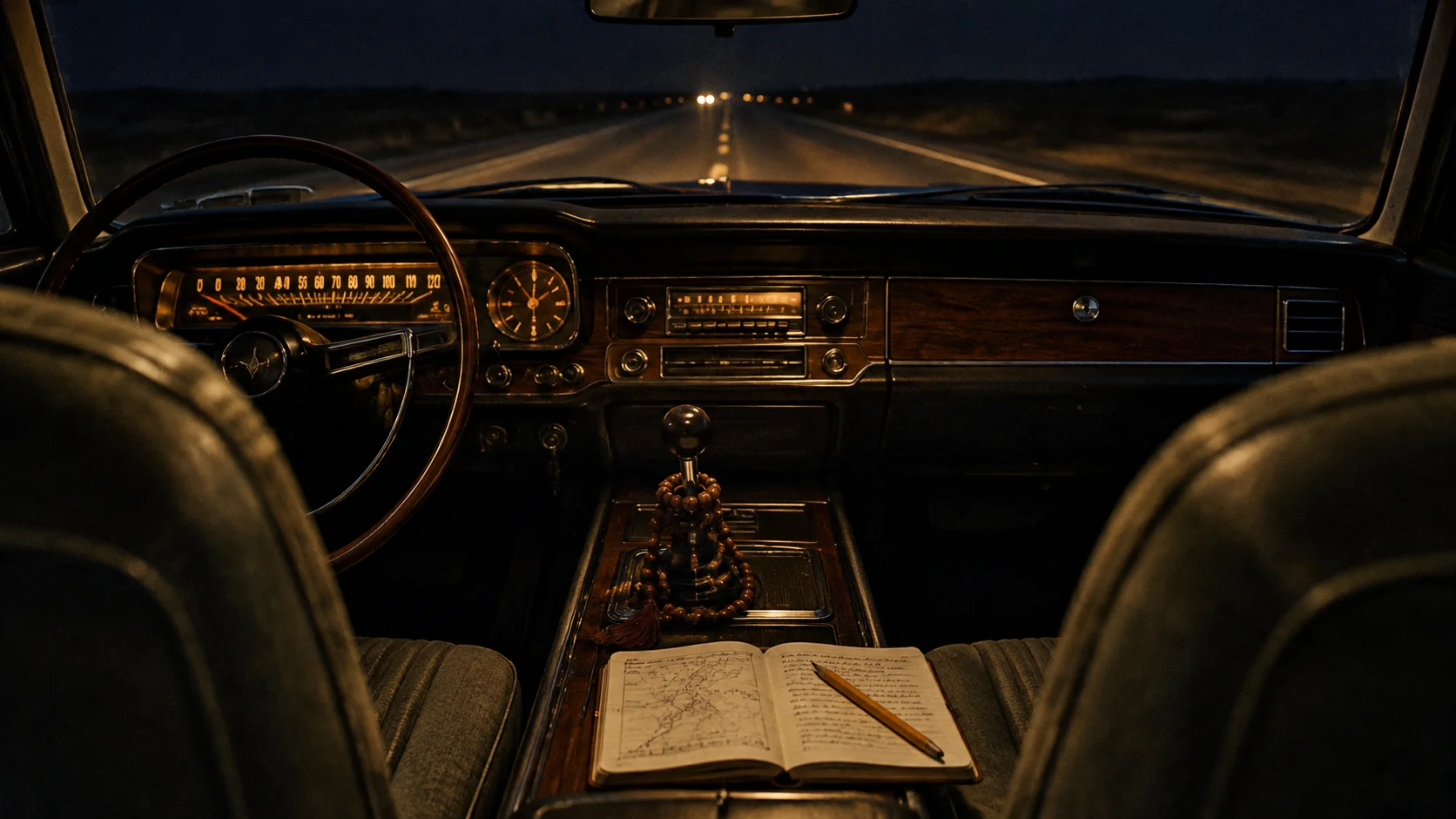
1. Continuous Japa and the Road to Portugal: Harrison practiced japa—the quiet repetition of the mantra on wooden beads. However, his breakthrough came when he began integrating the chant into daily life. He famously recounted a transformative test during an exhausting road trip across Europe: driving continuously for twenty-three hours from France to Portugal, he chanted the Maha-Mantra out loud for the entire journey. He discovered that continuous vocal vibration acted like a spiritual shield: 'You start chanting, and things start to happen transcendentally. It kept me in tune with reality... and you feel a bit invincible.'
2. The Vagal and Neurobiological Reset of Sonic Repetition: Chanting ancient Sanskrit names aloud engaged a known physiological mechanism: rhythmic, prolonged vocalization stimulates the vagus nerve, slows breathing, drops cortisol, and silences the default mode network. Whenever fame-induced panic or creative overwhelm struck, the sound vibration bypassed intellectual anxiety and restored biological equanimity.
3. Chanting into the Mainstream (My Sweet Lord): In 1969, Harrison produced a vinyl single of the Radha Krishna Temple chanting the Maha-Mantra on Apple Records. Defying all commercial expectations, the Sanskrit chant climbed to #12 on the UK pop charts and was performed on BBC's 'Top of the Pops'. In 1970, following the painful, bitter breakup of The Beatles, Harrison released his solo masterpiece, the triple album 'All Things Must Pass'. The centerpiece of the album was 'My Sweet Lord'—an international #1 hit that ingeniously wove Vedic mantra chanting into a global gospel anthem, introducing millions worldwide to the power of sacred sound.
4. The Ultimate Test (The 1999 Friar Park Intrusion): The profound depth of Harrison's practice was tested on December 30, 1999, when an armed intruder broke into his Friar Park mansion in the middle of the night and attacked him with a knife, stabbing him multiple times and puncturing his lung. In that terrifying confrontation, staring death in the face, Harrison did not scream in helpless panic; he immediately began chanting 'Hare Krishna' out loud, anchoring his consciousness to the sacred name even as he collapsed into unconsciousness.
The Quiet Beatle's Transcendental Legacy
Through thirty-five years of unbroken daily mantra practice, Harrison achieved the rare transformation from a disillusioned pop idol into a grounded, peaceful sage.
The mantra grounded his creative output. In 1971, he organized the historic Concert for Bangladesh at Madison Square Garden, creating the world's very first major humanitarian rock benefit concert and raising millions for starving refugees.
Throughout his life, whether tending his gardens at Friar Park, producing indie films through HandMade Films, or playing music with the Traveling Wilburys, Harrison attributed his inner peace entirely to the vibrational reality of the mantra: 'The mantra is always there. It purifies the mind and dissolves the ego.'
When George Harrison passed away peacefully in Los Angeles on November 29, 2001, at age fifty-eight, surrounded by his wife Olivia, son Dhani, and chanting friends, he left this world with total equanimity, with incense burning and the holy names echoing in the room.
George Harrison proved that the noise of the external world—no matter how deafening, glittering, or chaotic—can never overcome the sacred sound cultivated in the human heart. By chanting through adversity and fame alike, he demonstrated that true liberation is not found in fleeing the world, but in vibrating in harmony with the divine.