The Sky Diver Down and a Shattered Pelvis
In July 2001, Captain William H. McRaven was at the peak of his military career. A veteran Navy SEAL officer who had commanded SEAL Team 3, McRaven had been selected to command Naval Special Warfare Group 1 in Coronado, California. To his men, he was an embodiment of elite physical endurance, discipline, and tactical leadership.
Then, during a routine training exercise, tragedy struck.
During a night jump over San Diego at a thousand feet, another parachutist collided with McRaven's canopy. As their lines entangled, the chute deployed violently, wrapping heavy nylon risers around his body.
When the chute finally caught air, the violent shock wave snapped McRaven's body like a whip. The impact ripped his pelvis apart, breaking the pelvic bone by several inches, tearing his abdominal muscles completely off the bone, and severely fracturing his back.
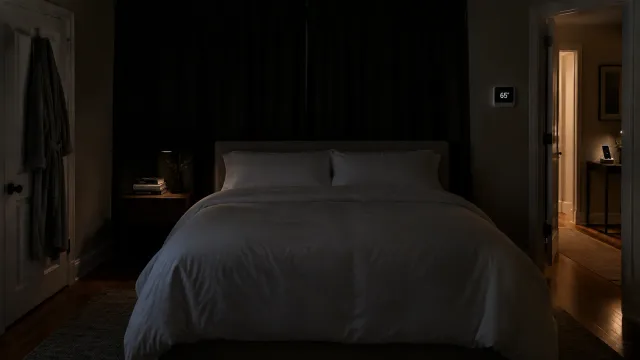
Hitting the ground at high speed, McRaven barely survived. Surgeons stabilized his internal bleeding, but the prognosis was devastating: his operational career was finished. Confined to a hospital bed wheeled into his home, immobilized in traction, he faced permanent disability and medical discharge. Lying in the dark, watching his muscles waste away, he felt the icy grip of self-pity, depression, and loss of identity.
The Hospital Corners and the Discipline of Small Wins
During his earliest days as a recruit in Basic Underwater Demolition/SEAL (BUD/S) training, McRaven had been subjected to the unrelenting inspection of his bed. Instructors demanded hospital corners folded at crisp forty-five-degree angles, sheets pulled so taut that a dropped quarter would bounce into the inspector's hand. At the time, it had seemed like petty bureaucratic harassment.
Lying in his hospital bed in 2001, unable to stand or walk, McRaven realized that bed-making was never about the bed; it was about human psychology.
When life strips away your strength, your health, and your control over the future, you cannot afford to wait for massive triumphs. You must anchor yourself to immediate, controllable micro-disciplines:
1. The Keystone Habit of the First Task: Every morning, no matter how excruciating the pain or how bleak the news, McRaven forced himself to make his hospital bed. Reaching out with his arms, he pulled the sheets straight, smoothed out the wrinkles, aligned the blanket, and centered the pillow. It was a humble act, but it accomplished the vital psychological prerequisite: completing the first task of the day. It provided an immediate, tangible dose of pride and self-efficacy, establishing an island of order in a storm of helplessness.
2. The Momentum Chain: McRaven recognized what behavioral psychologists call 'keystone habits.' Making his bed was the catalyst that triggered a chain reaction of other disciplined choices. Once the bed was made, it encouraged him to endure his agonizing physical therapy session, drink his water, eat clean food, and refuse painkiller lethargy. One small win created the momentum for the next.
3. The Sanctuary of the Return: On days when the rehabilitation was excruciating and his body failed him, returning to his bedroom offered profound solace. Even after a catastrophic day, he returned to a bed that was clean, orderly, and made by his own hands. A made bed provided tangible proof that tomorrow could be faced with dignity.
4. Finding Someone to Help You Paddle: A foundational SEAL tenet is that no one survives life's rough waters alone. McRaven swallowed his fierce pride, learning to accept the daily physical support of his wife, Georgeann, and his medical team. He realized that true strength lies not in isolated bravado, but in mutual trust and accountability.
5. The Refusal to Ring the Bell: In SEAL training, recruits who wish to quit must step forward and ring a brass bell hanging in the courtyard. In his hospital room, McRaven mentally banned the bell. When the pain urged him to accept disability retirement, he focused solely on the next physical therapy repetition, refusing to surrender his future.
From Hospital Bed to Four-Star Command
Through grueling, patient rehabilitation anchored in daily micro-discipline, McRaven accomplished what his surgeons deemed impossible. His fractured pelvis fused, his core muscles regenerated, and he passed every physical readiness test, returning to full active duty in special operations.
His recovery marked the beginning of an extraordinary chapter in American military history. McRaven rose to the rank of Four-Star Admiral, becoming the Commander of the United States Special Operations Command (USSOCOM). In that role, he commanded all American special forces and organized the historic 2011 operation that brought Osama bin Laden to justice.
In May 2014, McRaven returned to his alma mater, the University of Texas at Austin, to deliver a commencement address sharing the life lessons he learned from Navy SEAL training. His speech—anchored by the advice to 'make your bed every morning'—went viral, viewed over fifty million times worldwide.
In 2017, his book 'Make Your Bed' (Grand Central Publishing) became a global #1 New York Times bestseller translated into dozens of languages.
Admiral William H. McRaven proved that human greatness does not begin on grandiose stages. It begins in the quiet, unglamorous moments of our mornings. By mastering the small, immediate habits within our control, we forge the resilience required to survive life's deepest fractures and conquer the challenges of our world.