The Snap That Silenced the Dragon
On a morning in August 1970, twenty-nine-year-old Bruce Lee walked into his home gym in Los Angeles to perform his weight-training routine. Pressed for time, he skipped his usual warm-up stretches and placed a 135-pound barbell—roughly his own body weight—across his shoulders to perform "good mornings," bending forward at the waist to strengthen his lower back and hamstrings. On one repetition, a sharp, tearing pop echoed through his lower spine.
Lee collapsed in excruciating pain. Medical examinations revealed that he had severely damaged his fourth sacral nerve, the critical neural pathway supporting the lower back and pelvis. Doctors ordered him into complete bedrest and warned him that he would never kick or practice martial arts again—cautioning that he would be fortunate to regain a normal, pain-free walk.
The injury struck at the bleakest moment of Lee's adult life. After the cancellation of The Green Hornet in 1967, Hollywood studios had repeatedly passed him over for leading roles. With his savings depleted, his wife Linda took an evening job at an answering service to help support their two young children, Brandon and Shannon. Immobilized flat on his back in constant nerve pain, the man whose entire identity and livelihood revolved around physical movement faced total ruin.
"Walk On," Philosophical Notebooks, and Self-Directed Rehabilitation
In the first weeks of confinement, Lee struggled with intense frustration and depression. Yet as a student of Taoism, Zen Buddhism, and Jiddu Krishnamurti, he caught himself fighting reality and consciously shifted his approach. Writing in his personal notes during bedrest, he reflected: "Whether I like it or not, circumstances are thrust upon me, and being a fighter at heart, I sort of fight it in the beginning. But soon realize that what I need is not inner resistance and needless conflict, rather by joining forces to readjust, I need to make the best of it."
Rather than surrendering to the medical verdict, Lee turned six months of enforced bedrest into a disciplined laboratory of mental and physical reconstruction:
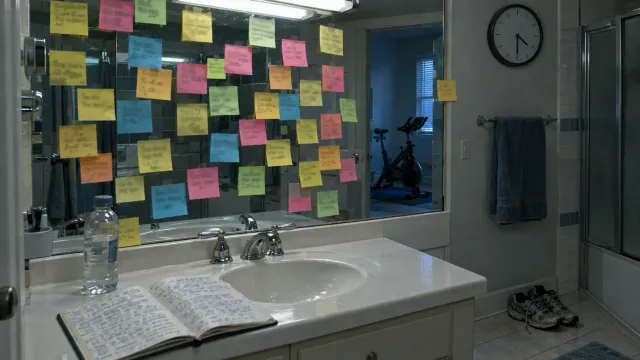
1. The "Walk On" Business Card Anchor: Refusing to accept permanent disability, Lee took one of his personal business cards and wrote two words across the back: "Walk on." He propped the card where he could see it every day from his bed and desk. In his journal, he expanded the cue into a personal directive: "Walk on and leave behind all the things that would dam up the inlet or clog the outlet of experience." Whenever pain or career despair rose, those two words interrupted self-pity and redirected his mind toward forward motion.
2. Daily Recitation of "My Definite Chief Aim": Alongside his "Walk on" card, Lee reinforced his focus using the handwritten affirmation sheet he had composed in January 1969, titled "My Definite Chief Aim," pledging to become the highest-paid Oriental superstar in the United States by 1980 by delivering the most exciting performances as an actor. Reading his written aim aloud daily kept his long-term vision alive while his body was immobilized.
3. An Eight-Step Therapeutic Discipline: Drawing on Buddhism's Eightfold Path, Lee wrote an explicit eight-part recovery rulebook for himself: "You must see clearly what is wrong. You must decide to be cured. Speak so as to aim at being cured. You must act. Your livelihood must not conflict with your therapy. The therapy must go forward at the staying speed. You must feel it and think about it incessantly. And learn how to contemplate with the deep mind."
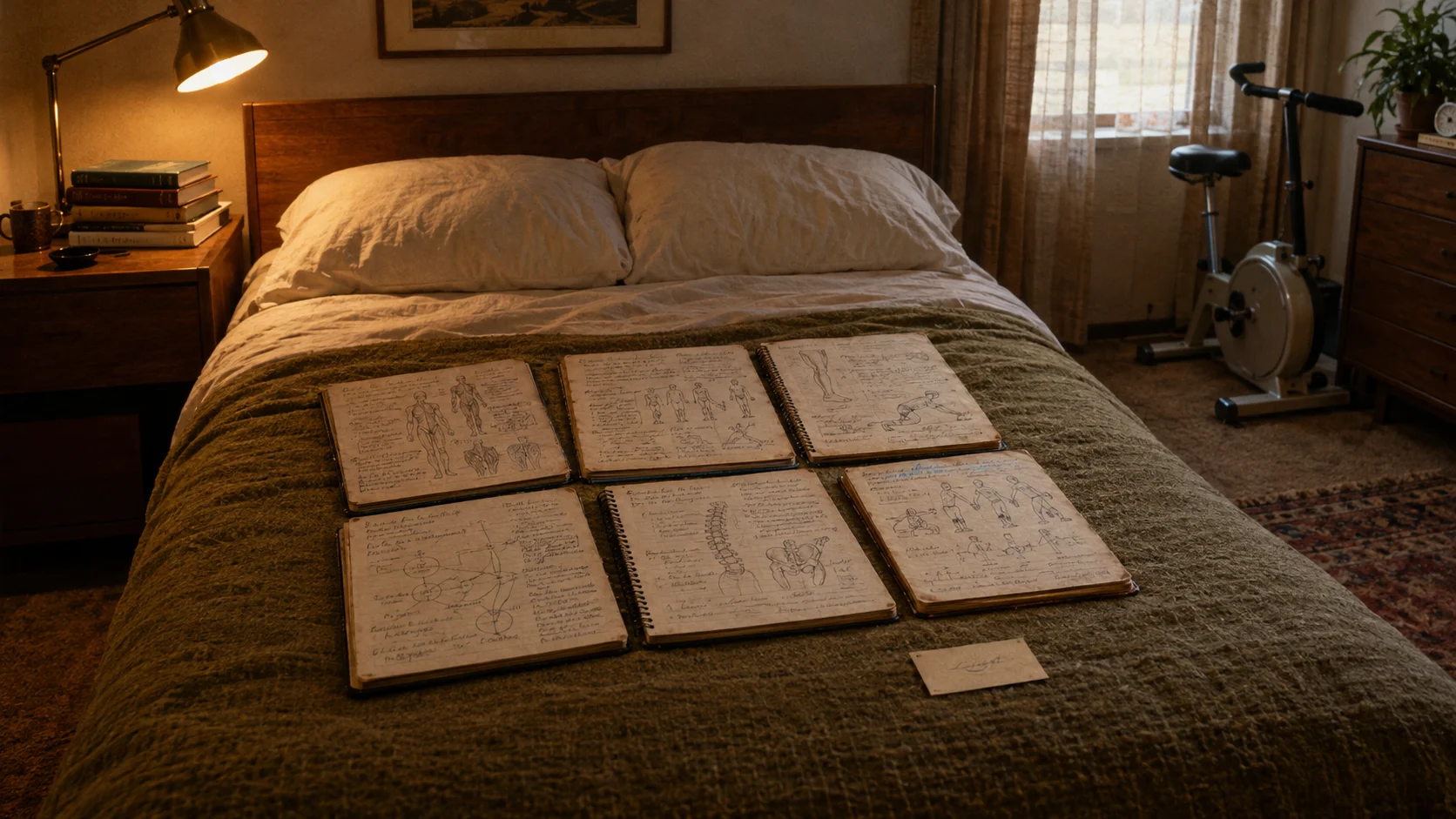
4. Six Months of Intensive Reading and Philosophical Journaling: Unable to train his body, Lee trained his mind for up to twelve hours a day. Propped up in bed with pillows, he devoured books on philosophy, kinesiology, psychology, and boxing, while compiling seven thick volumes of handwritten reflections and anatomical combat diagrams—the manuscript for his masterpiece, Tao of Jeet Kune Do.
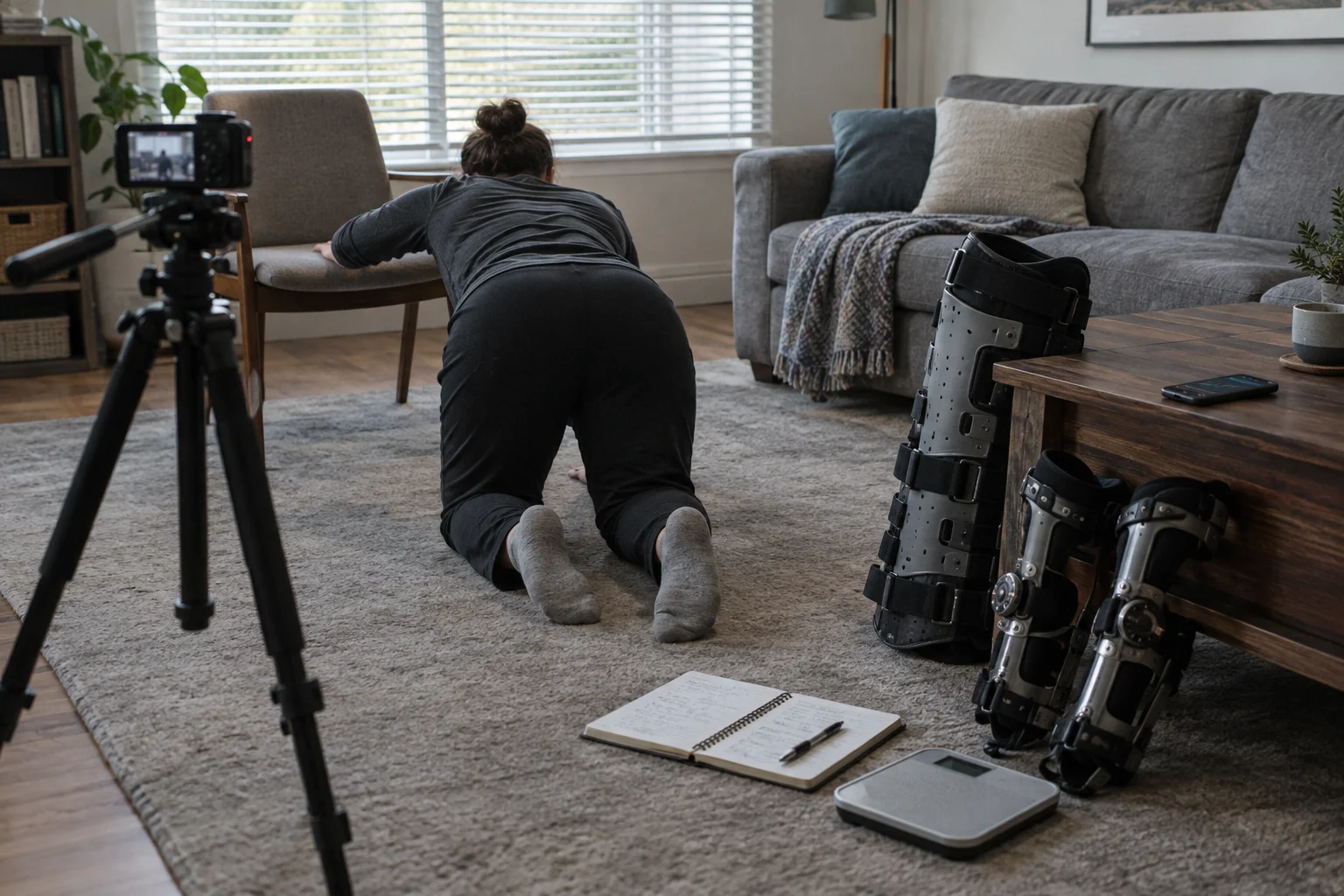
5. Methodical Self-Rehabilitation: Studying spinal anatomy, Lee designed a gradual, self-directed physical therapy regimen. As acute inflammation subsided, he began micro-movements, isometric core stabilization, stretching, and stationary cycling—slowly re-teaching himself to walk, run, and execute high kicks without re-injuring his back.
"When a sudden setback immobilizes your plans, drop inner resistance, keep a simple reminder like 'Walk on' in front of you, and channel your energy into sharpening your mind until your body can move again."
From Six Months in Bed to Global Cinema History
By early 1971, less than a year after doctors told him he would never practice martial arts again, Bruce Lee had rehabilitated his back well enough to travel to Hong Kong and sign a two-picture contract with Golden Harvest Studios. Though he lived with residual back pain for the rest of his life, his core conditioning allowed him to move on camera with blinding speed and power.
Between 1971 and 1973, Lee starred in four consecutive films that transformed global pop culture: The Big Boss (1971), Fist of Fury (1972), The Way of the Dragon (1972), and Enter the Dragon (1973), shattering box-office records worldwide and fulfilling his "Definite Chief Aim" years ahead of schedule.
After his untimely death in July 1973 at age thirty-two, the seven notebooks he had written while immobilized in bed were published as Tao of Jeet Kune Do (1975), selling millions of copies worldwide. As Lee wrote to a friend about his spinal injury: "With every adversity comes a blessing because a shock acts as a reminder to oneself that we must not get stale in routine." By dropping inner resistance and choosing to "Walk on," he turned his darkest physical setback into an enduring philosophical legacy.