The Skyhawk in Flames and the Village Below
On the morning of September 9, 1965, Commander James Stockdale was flying an A-4E Skyhawk on his 217th combat mission over North Vietnam. As the commander of Carrier Air Wing 16 aboard the USS Oriskany, Stockdale was the senior operational naval aviator in the Gulf of Tonkin.
Flying low, enemy anti-aircraft fire sheared through his jet. As smoke filled the cockpit, Stockdale ejected at high speed. The supersonic blast snapped a bone in his back and shattered his left knee, dislocating his leg at a right angle.
Drifting beneath his parachute toward a small North Vietnamese village, Stockdale was fully aware of the catastrophe awaiting him. As the highest-ranking naval officer captured, he knew he was the prime target for interrogation, ideological torture, and anti-war propaganda. He knew he was descending into hell.
Yet as he drifted downward, an extraordinary thought anchored his mind. He recalled his graduate studies in philosophy at Stanford University under Professor Philip Rhinelander, who had introduced him to the Enchiridion of Epictetus—the Greek Stoic who had been born a slave in Rome and lived with a crippled leg. Floating toward his captors, Stockdale whispered to himself: 'I am leaving the world of technology and entering the world of Epictetus.'
The Dichotomy of Control and the Crucible of Solitary
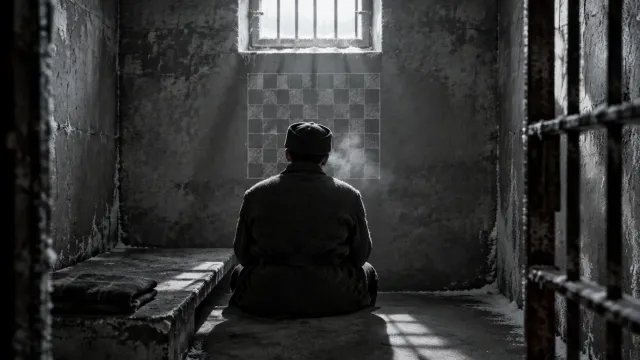
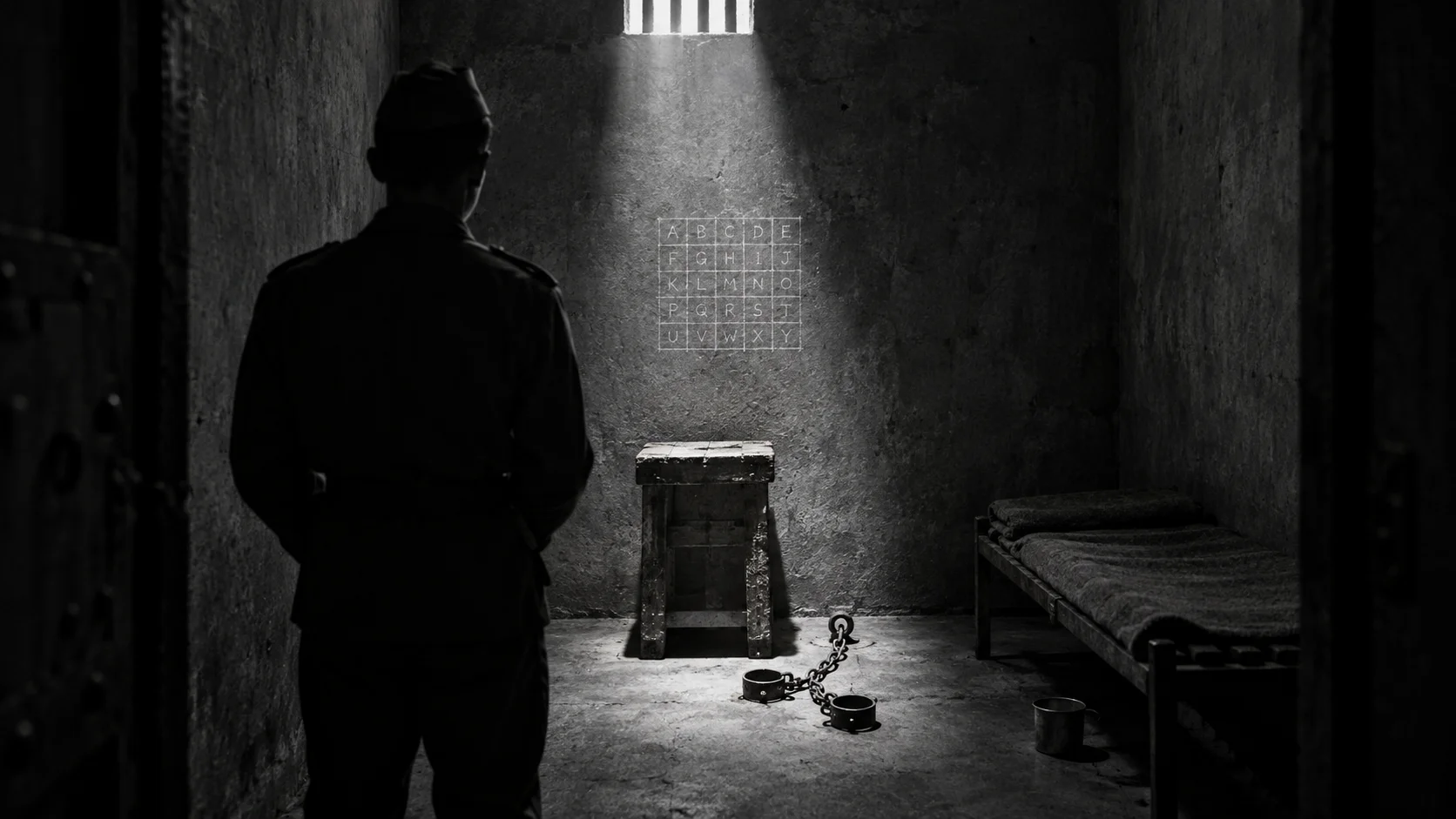
Stockdale was imprisoned in the infamous Hoa Lo Prison, known grimly as the 'Hanoi Hilton'. For seven and a half years (2,714 days), he was subjected to medieval brutality: he spent four years in solitary confinement in a windowless concrete cell, two years in heavy iron leg irons, and was subjected fifteen times to the agonizing 'rope torture', where limbs were tied behind the back until dislocated.
Rather than surrendering to despair or relying on fragile optimism, Stockdale transformed Stoic philosophy into a daily, life-or-death operating system:
"When you are plunged into circumstances you cannot control, do not confuse naive optimism with true resilience."
1. The Dichotomy of Control: Stockdale ruthlessly implemented Epictetus's core distinction: separating all things into what is 'up to us' (our opinions, moral choices, integrity, and internal responses) versus what is 'not up to us' (our physical body, torture, hunger, disease, the prison guards, and when the war ends). Stockdale recognized that his captors could break his bones and tear his muscles, but they could never control his mind or strip his honor unless he gave them permission. He released all attachment to external outcomes, choosing to focus solely on his own dignity and conduct.
2. The Stockdale Paradox: Stockdale formulated what author Jim Collins later immortalized in 'Good to Great' as the Stockdale Paradox: You must maintain unwavering faith that you can and will prevail in the end, AND simultaneously possess the fierce discipline to confront the most brutal facts of your current reality, whatever they might be. Stockdale observed that the naive optimists—those who kept saying, 'We'll be home by Christmas,' then Easter, then Thanksgiving—died of broken hearts. Stockdale prepared his men for the long haul, accepting that captivity might last a decade.
3. The 5x5 Tap Code and Underground Command: As the senior officer, Stockdale established a covert communication network through the thick prison walls using a 5x5 matrix tap code (c-a-t was 1-3, 1-1, 4-4). The tap code became the lifeblood of survival, allowing isolated men to share intelligence, encourage one another, and maintain military discipline. Stockdale codified clear resistance protocols: take torture before submitting; never confess; cross your fingers in propaganda photos; and maintain absolute unity.
4. Radical Self-Sacrifice for Integrity: In 1969, when prison officials announced that Stockdale was going to be filmed by foreign television crews for an anti-American propaganda broadcast, Stockdale took extreme action. Refusing to be used as a puppet, he slashed his scalp with a razor and beat his own face with a heavy wooden stool until his eyes were swollen shut and his face was a swollen, bloody pulp. When the guards saw his disfigured face, they canceled the broadcast. Later, when they threatened to torture him again, he slashed his wrists with broken window glass to prove that he would die rather than betray his men. Stunned by his unyielding resolve, the North Vietnamese ceased his severe torture and removed leg irons from the prisoners.
The Medal of Honor and the Stoic Resurgence
Stockdale's unshakeable moral command held his fellow POWs together through years of darkness. On February 12, 1973, following the Paris Peace Accords, Stockdale and his fellow prisoners were liberated during Operation Homecoming.
Though physically crippled for the rest of his life, Stockdale emerged with his honor, sanity, and spirit intact. In 1976, President Gerald Ford presented him with the Congressional Medal of Honor for his valiant leadership and extraordinary courage.
Stockdale rose to the rank of Vice Admiral and was appointed President of the Naval War College, where he introduced the study of moral philosophy and Stoicism to senior military officers.
In 1984, he co-authored his memoir, 'In Love and War', with his wife Sybil. In 1993, he published 'Courage Under Fire: Testing Epictetus's Doctrines in a Laboratory of Human Behavior' through the Hoover Institution at Stanford.
Vice Admiral James Stockdale proved that philosophy is not an academic luxury; it is the ultimate armor of the soul. By demonstrating that our inner sovereignty cannot be conquered by external tyranny, he provided a timeless blueprint for human resilience under the most extreme conditions on Earth.