The Invisible Prison in the Land of the Free
In May 1944, sixteen-year-old Hungarian ballerina Edith Eva Eger arrived at Auschwitz in a cattle car with her family. Within hours of stepping onto the selection ramp, Josef Mengele sent her parents directly to the gas chambers. That evening, Mengele entered the barracks demanding entertainment. Pushed forward by prisoners, Edith was forced to dance the waltz from 'The Blue Danube' for the man who had just murdered her mother. She closed her eyes and escaped into an internal theater of music, remembering her mother's final lesson: 'No one can take away what you put in your mind.'
Eger survived a year of brutal slave labor and a winter death march to Gunskirchen concentration camp in Austria. In May 1945, American soldiers liberating the camp saw her hand moving among a mass grave of corpses.
In 1949, Edith emigrated to the United States with her husband Béla and infant daughter. To neighbors in Texas, she appeared to live the American dream. But behind closed doors, Eger was suffocating in an invisible psychological prison.

You cannot change what happened, and you cannot control what the world does to you. But you can always choose your response. Stop waiting for the past to be different, stop acting as your own jailer, and make the conscious choice to step into the freedom of your own life.

For more than three decades, she lived with severe PTSD, panic attacks, and crushing survivor's guilt. She kept her Holocaust past an absolute secret, terrified of German accents and sirens, terrified that people would pity or reject her. Tormented by the accusation—'Why did I survive when my parents died?'—she attempted to earn her survival through frantic perfectionism and pleasing others. Free from barbed wire, she remained locked in a cell of shame.
The Discovery of Meaning and the Return to the Barracks
The turning point occurred in the late 1960s while Eger was studying psychology at the University of Texas at El Paso. A fellow student handed her Viktor Frankl's 'Man's Search for Meaning'.
Reading Frankl's realization—that between stimulus and response lies the human freedom to choose one's attitude—struck Eger like lightning. Frankl had also survived the camps, yet he had not spent thirty years drowning in shame. Eger realized that for decades, she had been acting as her own prison guard.
True liberation required an active, deliberate discipline of emotional courage and cognitive reframing:
1. The Psychology of Choice: Eger systematically replaced the passive victim question—'Why did this happen to me?'—with radical personal agency: 'What do I choose to do with this life now?' She recognized that while no one can choose their trauma, every individual holds absolute sovereignty over their response.
2. Sensory Grounding Against Panic Loops: Whenever sensory triggers provoked flashbacks or suffocating panic, Eger developed a present-moment cognitive anchor. She touched a physical object—a table, a wall, or her own arm—and repeated an unyielding mantra: 'I am here. This is now. The past is over, and it cannot harm me unless I invite it into my present.'
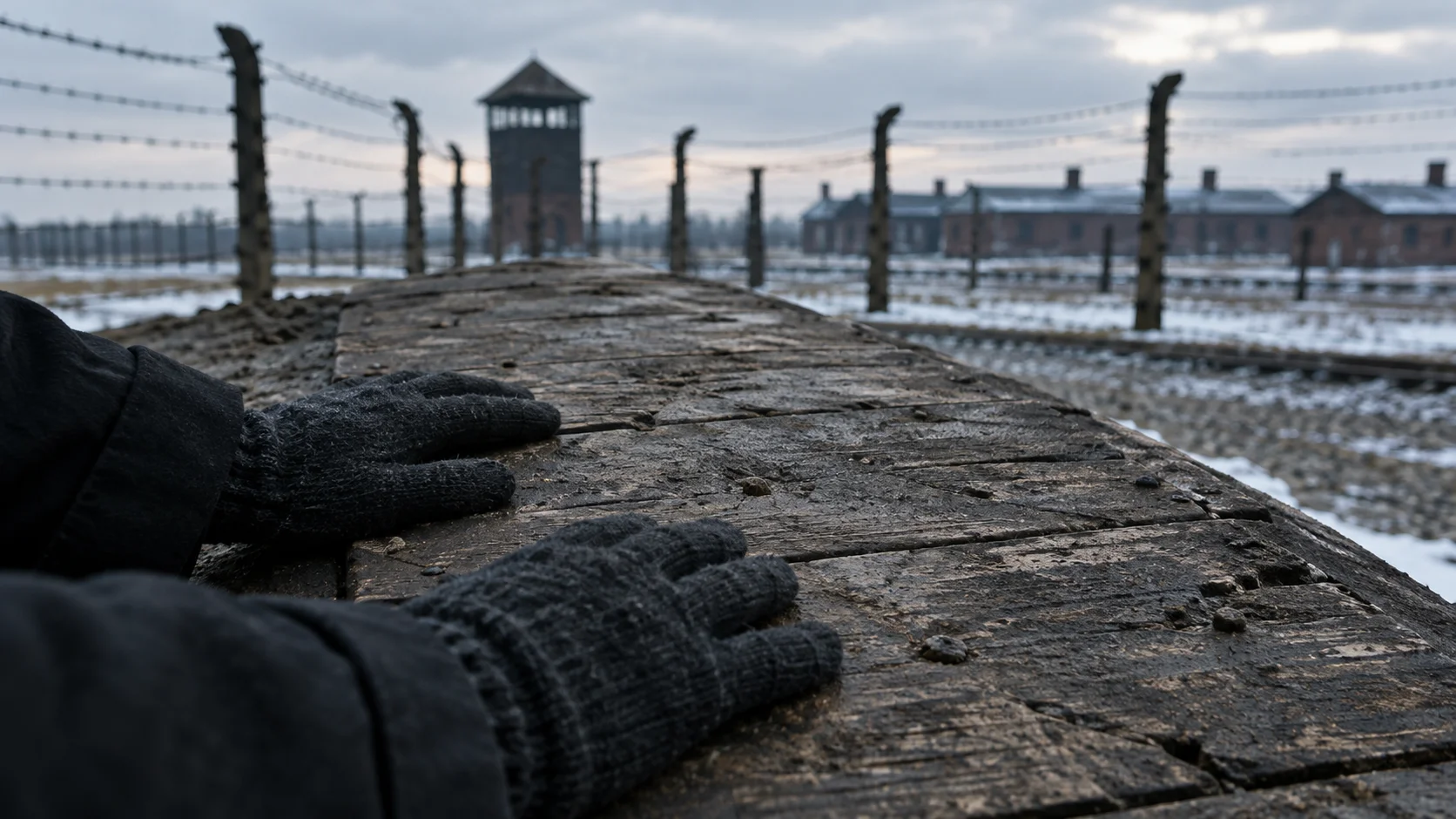
3. The Courageous Return to Auschwitz (1980): Eger recognized that you cannot heal what you refuse to feel. In 1980, after decades of avoidance, she returned to Auschwitz alone. Walking onto the selection ramp, she allowed decades of suppressed grief and terror to surface. Crucially, she confronted her core wound: she forgave herself for being an innocent sixteen-year-old girl who survived. She laid down her guilt in the barracks, transforming the site of trauma into a sanctuary of release.
4. Reparenting the Wounded Child: To dissolve self-blame, Eger began carrying a photograph of herself as a young girl before the war. Whenever self-critical thoughts arose, she looked at the photograph and offered the young Edith the unconditional love and protection she had been denied in the camps.
5. Transforming Trauma into Clinical Healing: Enrolling in university at age forty, she earned her bachelor's degree in 1969 and completed her Ph.D. in clinical psychology in 1978 at UTEP. She dedicated her practice to treating U.S. soldiers with combat PTSD at Fort Bliss, teaching service members that vulnerability is not weakness, but the ultimate expression of courage.
International Bestseller and Global Liberator
Through the daily practice of radical choice and emotional release, Eger dismantled her thirty-five-year psychological cage. She became one of the most beloved trauma therapists in America, known by patients as 'the ballerina of Auschwitz.'
In 2017, at age ninety, she published her debut memoir, 'The Choice: Embrace the Possible'. The book became an international phenomenon and a New York Times bestseller, translated into more than thirty languages and winning the National Jewish Book Award. Desmond Tutu, the Dalai Lama, and Oprah Winfrey praised her work as a timeless guide to resilience.
In 2020, at age ninety-three, she published 'The Gift: 14 Lessons to Save Your Life', synthesizing her clinical wisdom into practical prescriptions for escaping the self-constructed prisons of victimhood, shame, and fear.
Dr. Edith Eger demonstrated that suffering is universal, but victimhood is an optional posture. By choosing to face the darkest chambers of memory with radical acceptance and love, she proved that human beings can survive profound horror and emerge capable of radiant, unstoppable joy.