The Collapsed Drainpipe
In 1998, twenty-one-year-old British drama student Orlando Bloom stood on the roof terrace of a friend's house in London. Adventurous, restless, and admittedly reckless, Bloom attempted to hop across to another terrace by scaling an exterior drainpipe. Without warning, the old pipe gave way beneath his weight, plunging him three stories down onto concrete.
The impact was catastrophic. Bloom shattered three vertebrae in his spine, suffering severe structural damage to his spinal column. In the hospital, orthopedic surgeons operated for hours, carefully inserting metal plates and titanium pins into his fractured back to stabilize the bone shards and prevent his spinal cord from being completely severed.
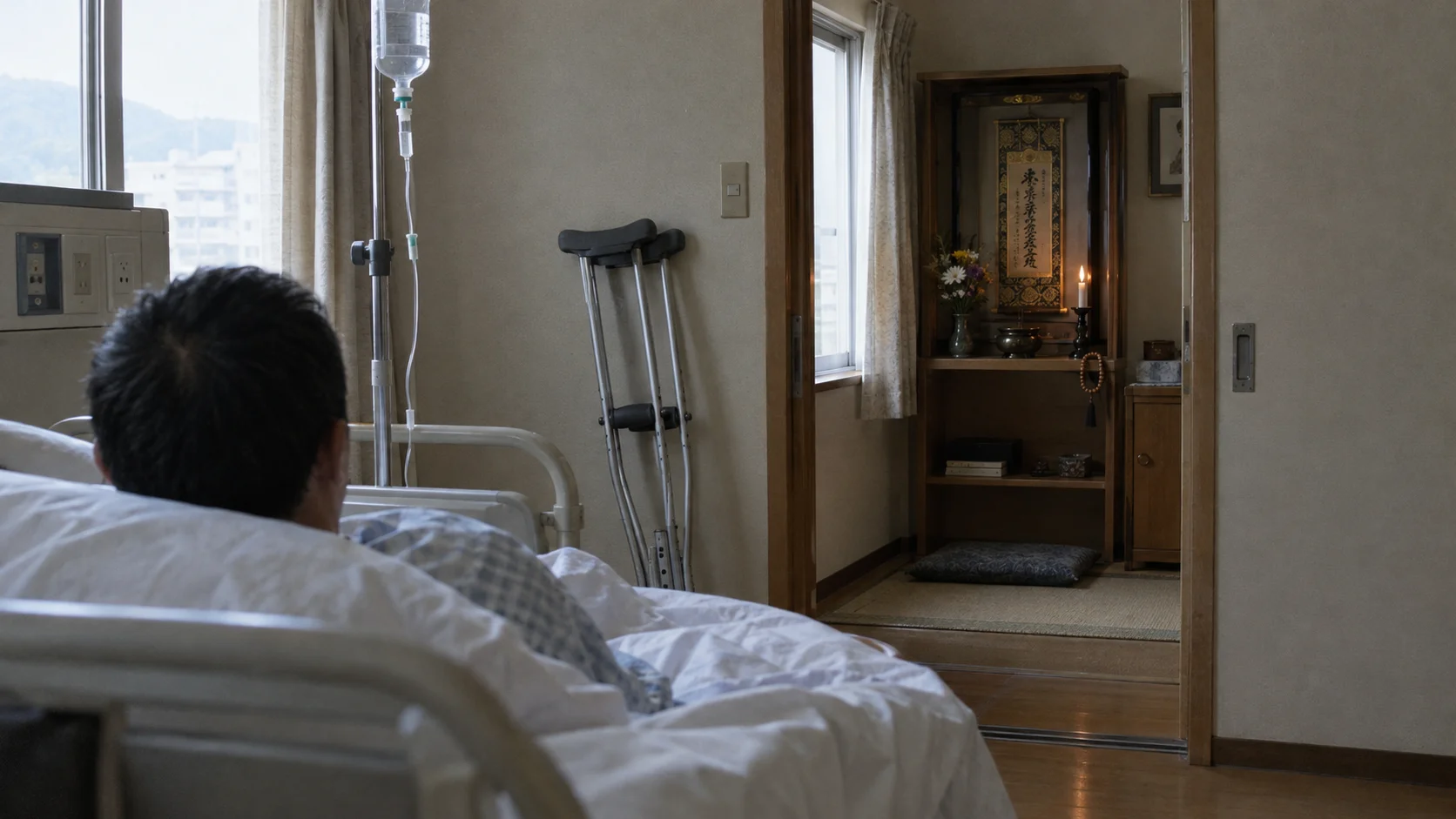
The medical prognosis was bleak. Doctors informed Bloom and his mother that he faced a minimum of six months confined to a hospital bed, with a high probability of permanent paralysis. Lying immobilized on his back, unable to move his legs or sit up, Bloom was confronted with the terrifying prospect of living the rest of his life in a wheelchair. The physical agony of post-surgical nerve pain was compounded by crushing psychological despair: his body was shattered, and his lifelong dream of becoming an actor appeared extinguished before it had even begun.
The Vibration of Nam-Myoho-Renge-Kyo and Changing Poison Into Medicine
At age sixteen, while studying art and sculpture in Kent, Bloom had encountered Nichiren Buddhism through an artist mentor. He had been introduced to the practice of chanting the sacred mantra Nam-myoho-renge-kyo—a phonetic phrase derived from the title of the Lotus Sutra, meaning "I devote myself to the mystic law of cause and effect through sound."
Faced with paralysis in his hospital bed, Bloom turned to the mantra not as an abstract philosophy, but as a practical lifeline for survival:
1. Chanting Through Agony in the Hospital Bed: Lying flat on his back, Bloom began chanting Nam-myoho-renge-kyo for hours every day. He focused on the deep, rhythmic vocal resonance, feeling the physical vibrations reverberate down his throat and into his chest and spine. The steady repetition provided a mental anchor, helping him manage waves of post-surgical nerve spasms without surrendering to despair or dependency on painkillers.
2. Changing Poison into Medicine: In Nichiren Buddhism, practitioners study the principle of hendoku-iyaku ("changing poison into medicine")—the conviction that any crisis, illness, or trauma can be transformed into the greatest catalyst for personal growth. Bloom consciously rejected the narrative of victimhood, choosing to view his shattered spine as a transformative wake-up call to master his mind and take responsibility for his life.
3. Daily Morning and Evening Gongyo Practice: Following his discharge, Bloom anchored his routine with the daily Buddhist practice of Gongyo—reciting designated portions of the Lotus Sutra and chanting Nam-myoho-renge-kyo every morning and evening in front of his home altar (the Gohonzon). He treated chanting as "polishing the mirror" of his inner life, clearing away mental confusion, calming his chronic childhood dyslexia, and aligning his mind with courage and clarity.
4. Navigating the "Eight Winds" of Hollywood Fame: As his career exploded, Bloom leaned heavily on Nichiren Daishonin's writing titled "The Eight Winds," which teaches that a wise person must remain unshaken by prosperity, decline, disgrace, honor, praise, censure, suffering, and pleasure. Whenever he faced intense public scrutiny, performance anxiety, or audition rejection, he chanted before meetings and auditions to ground himself in his core humanity rather than chasing external approval.
"When catastrophic setbacks threaten your future, do not view yourself as a victim. Use the steady rhythm of sacred sound to quiet your fears, anchor your mind, and turn your greatest poison into medicine."
From Hospital Bed to Middle-earth
The combination of rigorous medical rehabilitation, mental resolve, and hours of daily chanting produced an outcome that stunned Bloom's medical team. Just twelve days after major spinal surgery—having been told he would be hospitalized for six months—Bloom stood up on crutches and walked out of the hospital.
Bloom committed himself to intense physical therapy, yoga, and core conditioning to support his reconstructed spine. Within eighteen months of the near-fatal fall, he fully regained his physical mobility and graduated from London's Guildhall School of Music and Drama. Days before graduation, he auditioned for director Peter Jackson and was cast in the career-launching role of the agile elven archer Legolas in The Lord of the Rings trilogy. He performed demanding physical stunt sequences, horseback riding, and combat choreography across three blockbuster films, followed by starring roles in Pirates of the Caribbean and global recognition as a UNICEF Goodwill Ambassador.
Over twenty-five years later, Orlando Bloom continues to chant Nam-myoho-renge-kyo every single morning. He credits the ancient mantra with teaching him that external circumstances do not determine our fate; by harnessing the power of sacred sound and focused intention, we can transform the darkest moments of suffering into enduring strength.