The Myth of the Tortured Artist
In the mid-1970s, Julia Cameron appeared to be operating at the pinnacle of creative success. In her twenties, she was already a prominent feature writer for Rolling Stone, The Washington Post, and Vogue, and had transitioned into Hollywood screenwriting, collaborating on film projects with Martin Scorsese, to whom she was briefly married. Yet beneath her glamorous professional exterior lay a destructive, accelerating personal crisis.
Cameron was trapped in severe alcoholism and drug addiction. Like many writers of her generation, she had internalized the romantic myth of the tortured artist, believing that whiskey and cocaine were the indispensable fuels of creative genius. She could not imagine writing without a drink in hand; chemicals muted her crippling self-doubt and silenced her hyperactive internal critic.
By January 1978, at age twenty-nine, the toxic bargain came due. Her physical and psychological health deteriorated into frequent blackouts, severe paranoia, and near-psychosis. Facing total collapse, Cameron made the life-saving decision to enter recovery and stop using drugs and alcohol.

"The practice dismantled Cameron's creative block, enabled her to maintain over forty years of continuous sobriety, and launched a prolific career writing dozens of books, plays, and musicals."

Sobriety, however, ushered in a new and terrifying nightmare: complete creative paralysis. Without alcohol to numb her anxiety, sitting before the typewriter filled her with cold dread. Every sentence she drafted seemed juvenile, flat, and embarrassing. Her inner critic shouted that she had traded her talent for her sobriety, and that without alcohol, she was an empty vessel. Paralyzed by the fear that she would never write again, Cameron realized that if she could not find a way to write sober, she would inevitably relapse and die.
The Daily Act of Mental Dusting
Faced with existential panic, Cameron abandoned the high-stakes pressure of writing brilliant screenplays and instead devised a modest, private discipline designed to bypass her perfectionism. She called it 'Morning Pages.'
The practice was deceptively simple, non-intellectual, and rigid in its execution:
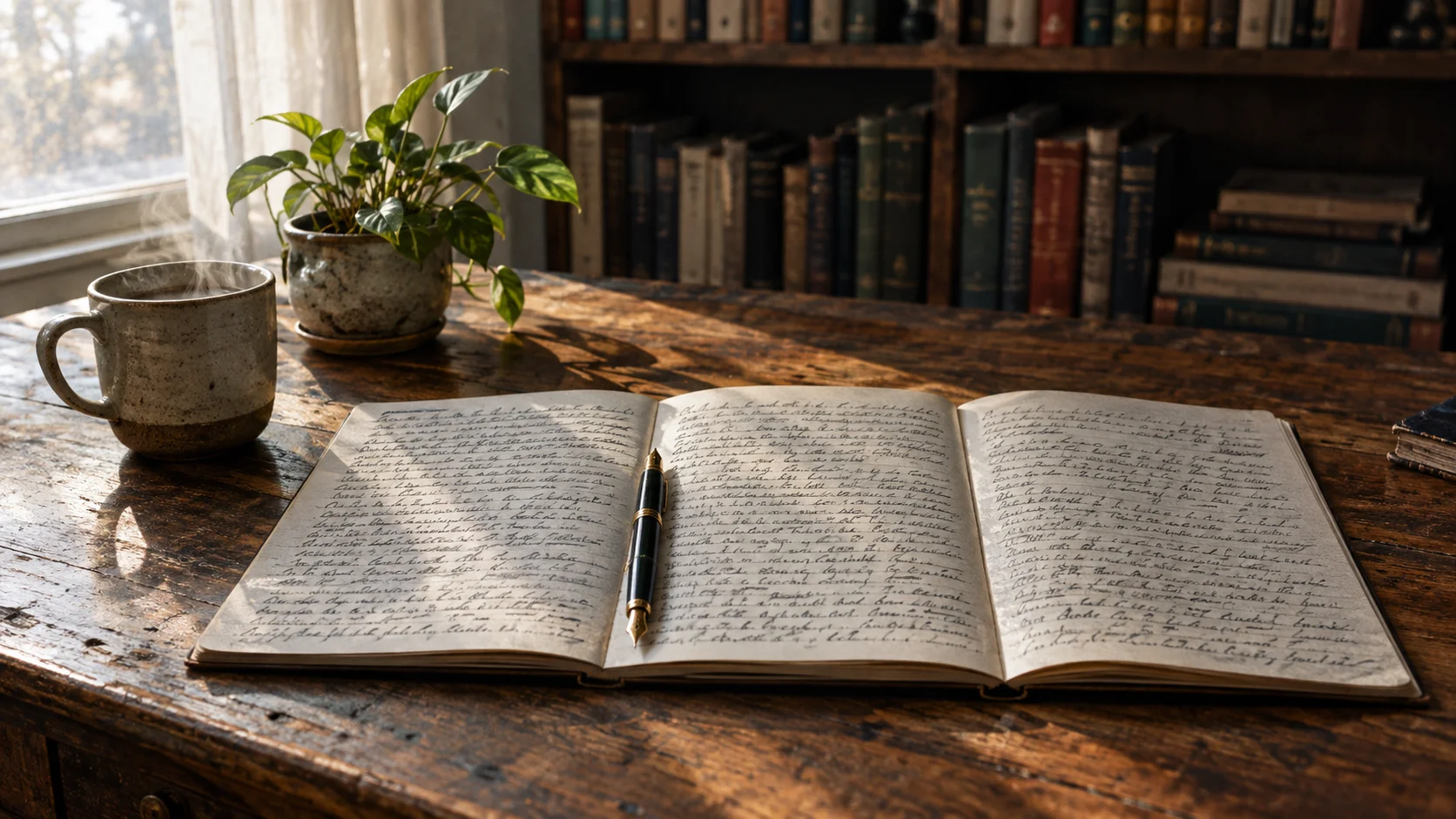
1. Three Longhand Pages: Every single morning, immediately upon waking and before engaging with the demands of the day, Cameron sat down with a pen and an 8.5x11 lined notebook to fill exactly three pages. Longhand was mandatory; typing was too fast, cerebral, and prone to rapid editing, whereas the slower physical movement of the hand engaged emotional vulnerability.
2. Uncensored Stream-of-Consciousness: The pages were not allowed to be art. There was no wrong way to do them. Cameron wrote whatever drifted through her consciousness: complaints about the weather, petty resentments, grocery lists, irrational fears, domestic anxieties, or repetitions of 'I don't know what to write.' The objective was not literary excellence, but complete honesty.
3. Total Privacy and No Re-Reading: To disarm the inner censor, Cameron established a strict rule: nobody else was ever allowed to read the pages, and she would not re-read them herself for the first few months. This removed performance anxiety and granted her total freedom to be messy, childish, or trivial.
4. The Artist's Date: To balance the discipline of Morning Pages, Cameron added a weekly two-hour solitary expedition called the 'Artist's Date'—a dedicated excursion to visit a fabric store, museum, flea market, or park purely to feed her sensory curiosity and refill her creative well without any utilitarian goal.
Cameron discovered that Morning Pages functioned like a spiritual windshield wiper. By dumping her internal debris, grievances, and neurotic chatter onto paper first thing in the morning, her mind was cleared of clutter for the remainder of the day. More importantly, she learned to separate her creative impulse from her inner censor—a nagging, judgmental voice she realized was not a divine arbiter of quality, but merely scared, wounded ego.
The Artist's Way and Worldwide Renaissance
The daily practice produced an extraordinary breakthrough. Within months, Cameron's creative paralysis dissolved. Writing without alcohol was not only possible; it was clearer, more sustainable, and infinitely more joyful. She completed plays, screenplays, poetry collections, and novels, maintaining continuous sobriety that lasted for more than four decades.
In the mid-1980s, Cameron began sharing her journaling tools with blocked painters, musicians, and writers in Chicago and New York. Finding that her simple techniques consistently unblocked people who had been creatively frozen for years, she organized her exercises into a structured curriculum.
In 1992, Cameron published 'The Artist's Way: A Spiritual Path to Higher Creativity.' Initially rejected by major publishers who deemed it too unconventional, Cameron printed and sold photocopied spiral-bound editions out of a local bookstore before Jeremy Tarcher published it.
'The Artist's Way' exploded by word of mouth into a monumental international bestseller, selling more than five million copies in forty languages. Decades later, Morning Pages remains one of the world's most widely practiced creative and psychological unblocking disciplines. Celebrated artists—including Elizabeth Gilbert, Alicia Keys, Pete Townshend, and Martin Scorsese—as well as entrepreneurs, lawyers, educators, and software engineers, credit Cameron's morning journaling ritual with rescuing their focus, healing burnout, and reconnecting them with their authentic voices.