The Bare Seclusion Cell
In March 1961, eighteen-year-old Marsha Linehan was admitted to the Institute of Living in Hartford, Connecticut, one of the oldest psychiatric hospitals in the United States. To her family and peers in Tulsa, Oklahoma, Marsha had appeared to be a vibrant, popular high school student. But in her final year of school, an overwhelming internal turbulence consumed her: uncontrollable emotional storms, debilitating headaches, and an agonizing sense of alienation from herself.
Inside the hospital, her condition deteriorated rapidly. Diagnosed with severe schizophrenia and profound depression—conditions later understood as Borderline Personality Disorder—Linehan was placed on the maximum-security locked ward. She became chronically suicidal and engaged in severe self-harm, cutting her arms and abdomen, burning herself with cigarettes, and repeatedly slamming her head against concrete walls to quiet unbearable internal agony.
The hospital's response was custodial and punitive. Linehan spent months confined to a bare, padded seclusion room with a locked iron door, stripped of her clothes, possessions, and dignity. Staff subjected her to high-dose Thorazine and repeated rounds of electroconvulsive therapy (ECT). The shock treatments wiped out vast swathes of her memory and destroyed her ability to play the piano, but failed entirely to soothe her torment. Viewing her as one of the most disturbed patients in their care, doctors concluded that she would spend the rest of her life institutionalized.

Stop fighting the reality of what already exists. Pain is an unavoidable part of living, but suffering is what happens when you refuse to accept pain. Open your hands, acknowledge reality as it is, and direct your energy toward the actions that build a life worth living.

The Chapel Vow and the Architecture of Acceptance
After twenty-six grueling months inside the locked ward, Linehan was discharged in 1963. Though no longer confined to a hospital cell, she remained tormented by suicidal impulses and emotional volatility.
The turning point occurred in 1967 while living in Chicago. Kneeling in prayer in a small Catholic chapel, Linehan experienced a profound epiphany. For the first time in her life, she felt unconditional love and total acceptance of herself exactly as she was, flaws and agony included. In that moment of grace, she made a solemn vow: 'I will get myself out of hell, and when I do, I will go back and get others out.'
Linehan recognized that traditional psychiatry had failed her because it focused relentlessly on trying to force patients to change their feelings, which only exacerbated their sense of invalidation and panic. What she needed was a counterintuitive synthesis of radical acceptance and disciplined behavioral training:
1. Radical Acceptance: Linehan observed that suffering equals pain multiplied by non-acceptance. While physical and emotional pain are unavoidable aspects of human life, agonizing suffering arises when one refuses to accept reality as it is—raging against facts, wishing the past were different, and demanding that the universe conform to one's desires. She trained herself in Radical Acceptance: completely accepting reality as it is, without judgment or resistance. Accepting reality did not mean approving of cruelty; it meant ending the futile war with what already exists so that effective action could begin.
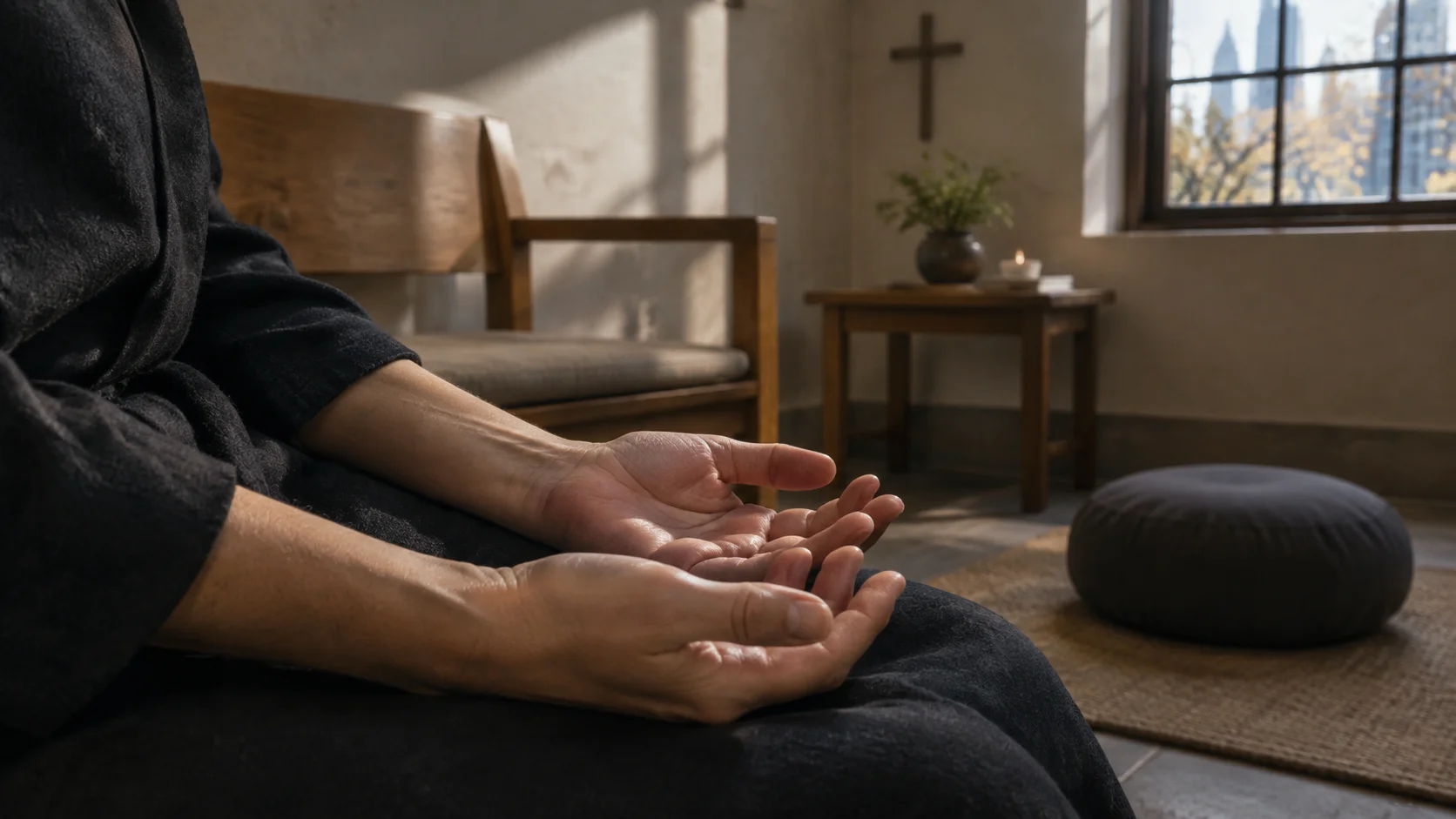
2. Somatic Neurobiological Resets (Willing Hands and Half-Smile): Linehan discovered that the body directly dictates nervous system arousal. When gripped by panic or rage, the body naturally clenches into fists and tight expressions, reinforcing threat loops in the brain. She developed physical counter-postures: 'Willing Hands' (turning palms upward and resting them loosely on the lap to signal non-defensiveness) and the 'Half-Smile' (relaxing the jaw and slightly upturning the mouth to activate facial-feedback pathways associated with calm).
3. The Discipline of Opposite Action: Linehan noted that every intense emotion carries an innate action urge—depression urges withdrawal; anger urges attack; fear urges escape. She instituted a strict behavioral rule: when an emotion is unhelpful or disproportionate to reality, identify its physical urge and deliberately do the exact opposite. If depression urged her to lie in bed in the dark, she got up, turned on the lights, and walked outside; if anxiety urged her to avoid a conversation, she stepped directly toward it.
4. Dialectical Synthesis: Rather than getting trapped in rigid 'black-or-white' thinking, Linehan adopted a dialectical framework holding two seemingly contradictory truths together: 'You are doing the best you can in this moment, AND you must learn to do better and change.' This eliminated toxic shame while maintaining the responsibility to grow.
5. Zen Mindfulness Integration: To deepen her mastery over emotional states, Linehan trained intensively in Zen meditation under Roshi Willigis Jäger, eventually becoming an authorized Zen master herself. She translated monastic mindfulness into practical attentional exercises for regulating high-arousal emotions.
Scientific Breakthrough and Global Redemption
Through the unrelenting practice of these emotional disciplines, Linehan dismantled her chronic suicidality and restored emotional equilibrium. She worked her way through academia, earning her bachelor's, master's, and Ph.D. in psychology from Loyola University Chicago by 1971.
She joined the faculty at the University of Washington, where she founded the Behavioral Research and Therapy Clinics. Drawing directly from the behavioral practices that saved her own life, Linehan created Dialectical Behavior Therapy (DBT).
In randomized clinical trials published in leading psychiatric journals, DBT achieved what mainstream psychiatry had long deemed impossible: it cut suicide attempts and hospitalizations among chronically suicidal patients diagnosed with Borderline Personality Disorder by more than fifty percent. DBT became the gold-standard, evidence-based treatment adopted by hospitals, clinics, and prisons across the globe.
For decades, Linehan kept her early history of institutionalization a secret, fearing academic dismissal. But in 2011, at age sixty-eight, she courageously revealed her story on the front page of The New York Times, followed by her 2020 memoir, 'Building a Life Worth Living.' Her life stands as one of modern psychology's greatest testaments: that the deepest emotional hell can be transformed into a rigorous, compassionate science of human flourishing.