The Fiery Militant in Cell Four
In June 1964, forty-five-year-old Nelson Mandela stood in the dock of the Pretoria Supreme Court at the conclusion of the Rivonia Trial, facing the death penalty for conspiring to overthrow the South African apartheid regime. Spared the gallows, he was sentenced to life imprisonment and immediately flown under armed guard to Robben Island—a desolate, wind-scoured penal colony in the Atlantic Ocean off the coast of Cape Town.
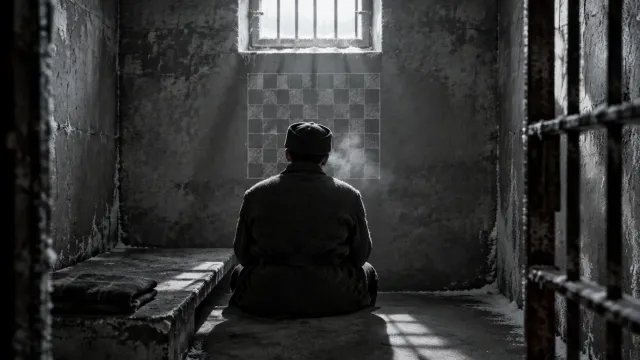
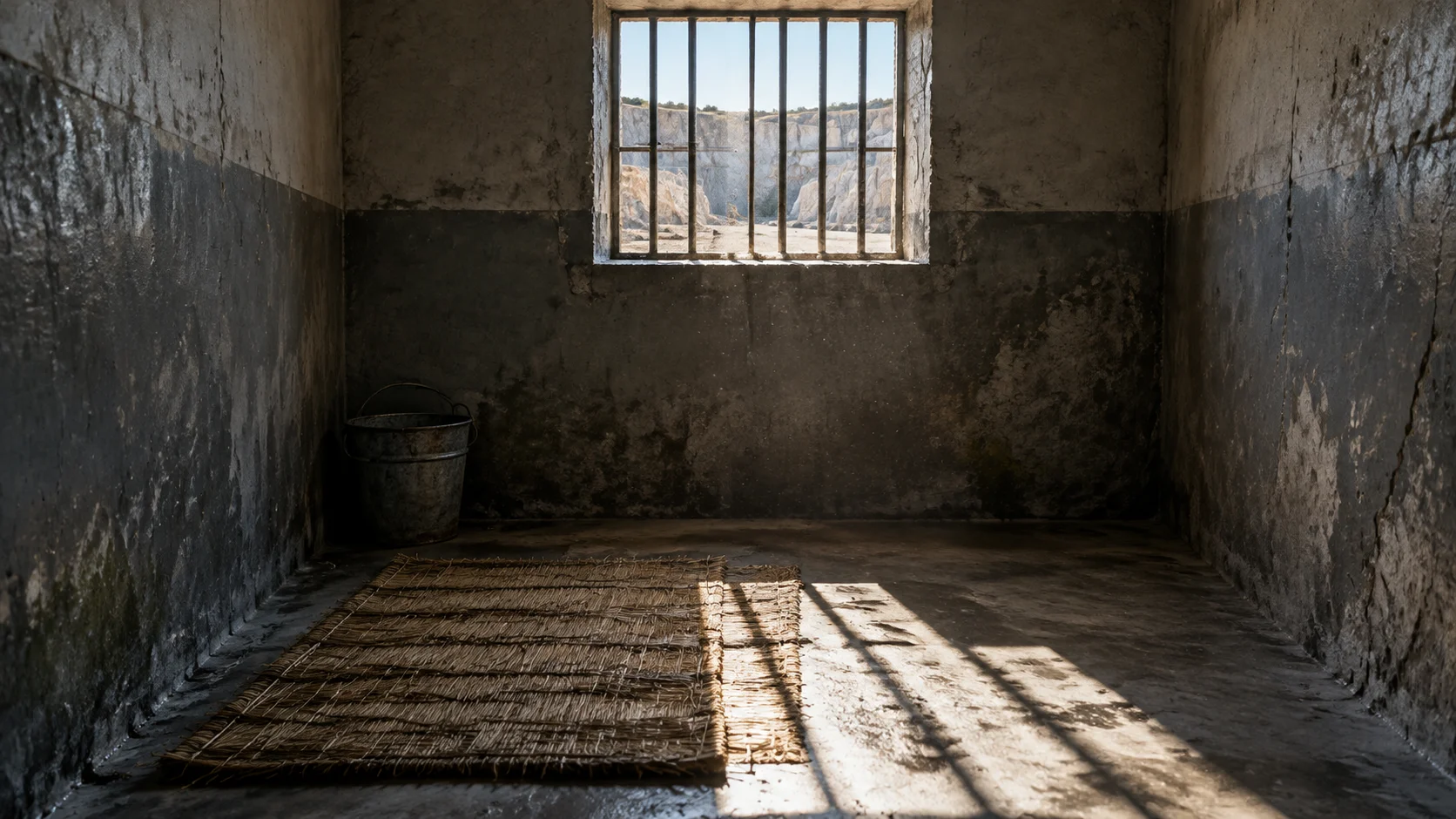
Mandela was stripped, chained, and locked inside Cell Four of Section B: a concrete room measuring barely seven feet by seven feet, furnished only with a straw sleeping mat, an iron bucket for a toilet, and a tiny barred window overlooking a walled courtyard. In his youth, Mandela was not the serene, saintly figure remembered today. He was aristocratic, proud, and possessed a fierce, combative temper. As the founding commander of the armed wing of the African National Congress (Umkhonto we Sizwe), he believed in aggressive confrontation and burned with visceral fury against the racist cruelty of the apartheid state.
On Robben Island, white wardens deliberately subjected Black political prisoners to sadistic degradation. Prisoners were forced to wear short trousers—a humiliating visual marker of boys in South African culture—denied basic dignity, and marched daily to a blinding limestone quarry where they broke boulders into gravel with small iron hammers in suffocating white dust. Many prisoners succumbed to blinding rage, bitter despair, or psychological collapse. Mandela realized that if he met violence with raw, reactive hatred, the prison system would destroy his health, poison his soul, and extinguish his cause.
The Courtyard, the Poem, and the Enemy's Tongue
Recognizing that survival required total emotional discipline, Mandela transformed his imprisonment from a punishment into an intentional crucible of self-mastery. Over twenty-seven years, he cultivated four interconnected practices of mental and emotional development:
1. Daily Recitation of Invictus: Every morning, Mandela braced his mind against bitterness by reciting William Ernest Henley's Victorian poem Invictus: "In the fell clutch of circumstance, I have not winced nor cried aloud... I am the master of my fate, I am the captain of my soul." He copied the verses onto scraps of paper and shared them with fellow inmates, using the words as a shield against victimhood and despair.
2. Radical Empathy and Language Mastery: Mandela realized that to defeat apartheid, he had to understand the psychological fears of the white minority. In his cell, he studied Afrikaans—the language of his oppressors—along with Afrikaner history, literature, and rugby culture. When wardens shouted racial slurs, Mandela responded in fluent, polite Afrikaans. By speaking their native tongue, he disarmed their hatred and saw them as human beings trapped in their own prejudice. Over years, wardens like Christo Brand and James Gregory shifted from hostile overseers into devoted admirers and lifelong friends.
3. Strict Physical and Intellectual Regimen: Mandela treated his body as a fortress. Waking at 5:00 AM in the freezing damp of his cell, he performed forty-five minutes of rigorous calisthenics—push-ups, sit-ups, and running in place. In the lime quarry, while breaking stones under the blazing sun, he and his comrades organized "Robben Island University," debating political philosophy, economics, and history to keep their minds sharp.
4. The Discipline of Conscious Non-Reactivity: Mandela trained himself never to respond to insult or aggression from an emotional impulse. When provoked by prison authorities, he deliberately lowered his voice, softened his posture, and maintained steady, calm eye contact. He anchored his emotional state to a core principle: "Resentment is like drinking poison and then hoping it will kill your enemies." By refusing to swallow the poison of hatred, he remained free inside a concrete cage.
Walking Into History Without Bitterness
On February 11, 1990, after 10,000 days of incarceration across Robben Island, Pollsmoor, and Victor Verster prisons, Nelson Mandela walked out of the prison gates a free man. Millions watched across the globe, expecting a vengeful revolutionary ready to unleash a catastrophic racial civil war.
"Do not let anger and resentment become a prison within your own mind. Master your reactions, seek to understand the fears of those who oppose you, and choose forgiveness as the ultimate instrument of personal freedom."
Instead, the world met a leader whose emotional mastery had dissolved all desire for retribution. Mandela extended his hand to his former oppressors, famously declaring that as he walked out the door toward his freedom, he knew that if he did not leave his bitterness and hatred behind, he would still be in prison.
Over the next four years, Mandela navigated delicate, volatile negotiations with President F.W. de Klerk, averting widespread bloodshed and guiding South Africa to its first multiracial democratic elections in 1994. Awarded the Nobel Peace Prize in 1993 and inaugurated as President of South Africa in 1994, he established the Truth and Reconciliation Commission to heal the nation's trauma through restorative justice rather than vengeance. In 1995, in one of the most iconic acts of emotional leadership in modern history, he donned the green jersey of the Springboks—a rugby team historically reviled by Black South Africans as a symbol of apartheid—and rallied the entire nation behind them to win the Rugby World Cup.
Nelson Mandela's journey proved that true power is not the ability to inflict pain on your enemies, but the supreme self-command to master your own heart. By turning twenty-seven years of confinement into a daily practice of emotional regulation, he showed humanity that forgiveness is not weakness—it is the ultimate weapon of the truly strong.